
Metal Gear Solid - Lessons in Appreciation
The Backlog Bin #012

Metal Gear Solid is a name that evokes strong emotion in the hearts of so many people. Throughout my entire gaming career, it’s the one series that has been recommended to me ad nauseam, each of its entries swimming in a sea of endless praise. Even the supposedly “bad” games in the series are allowed to bask in that love, while other titles are left starved for attention. Admittedly, this overwhelming reverence pushed me to purposefully avoid the series altogether.
From the outside looking in, the games always seemed like competent, cinematic blockbuster fare. There was nothing that conceptually interested me beyond their historical novelty and, admittedly, my personal affection for Metal Gear on the NES. That changed with the inception of The Backlog Bin and a promise I made to myself to become more educated on gaming history.
So, I placed the first Metal Gear Solid at the top of my backlog and began chewing through it in early November. Since then, I’ve put nearly fifteen hours into the game, learning that—while undeniably dated—everyone was right: this is one of the most important video games ever developed.
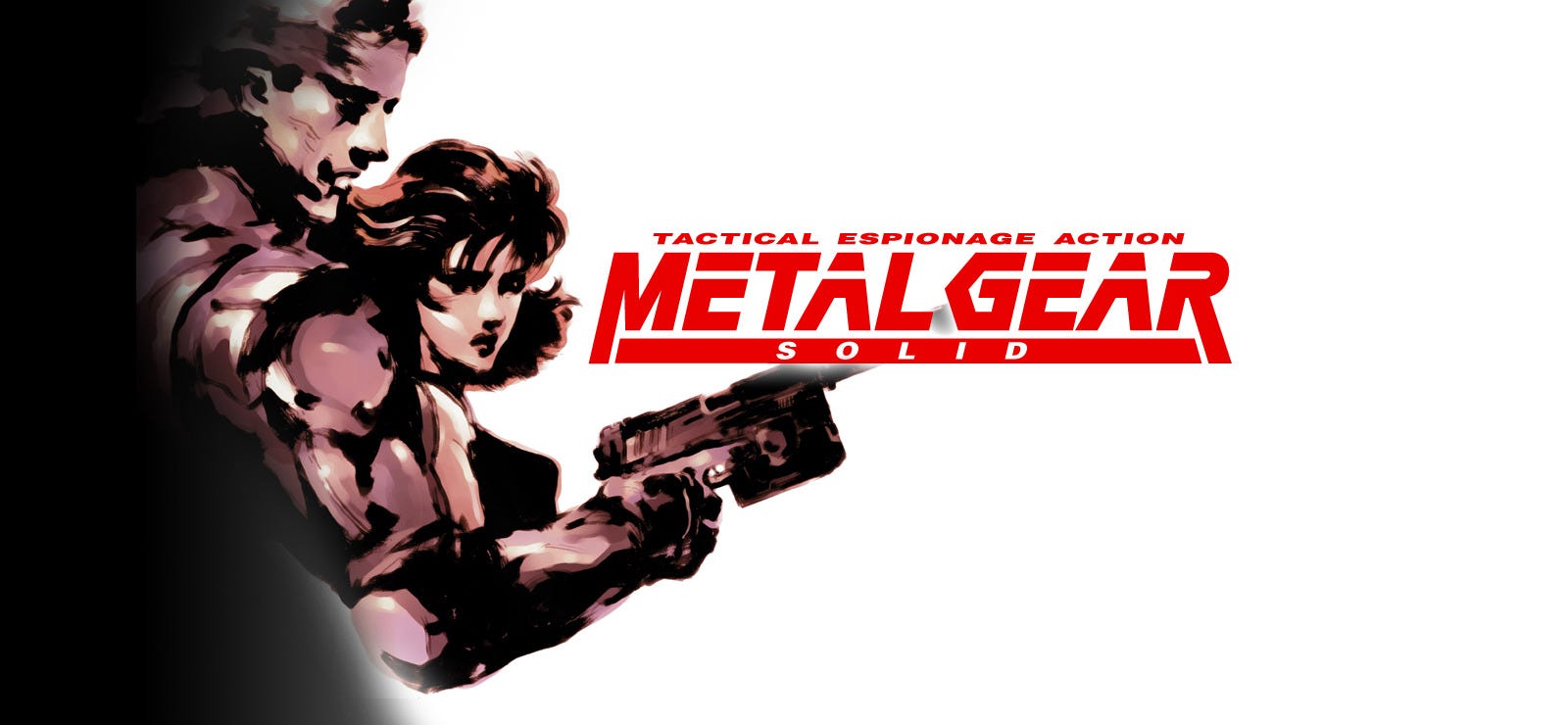
Set in a secret Alaskan nuclear facility, Metal Gear Solid thrusts players into the boots of professional mercenary Solid Snake. Equipped initially with little more than a pack of cigarettes and a pair of binoculars, Snake must work to dismantle a terrorist conspiracy threatening to activate a bipedal weapon system capable of unleashing nuclear devastation upon the world at the height of the Cold War. With betrayal and secrecy lurking around every corner, Snake’s stand against the villainous FOXHOUND unit is laced with stakes that are as personal as they are global.
In many ways, my initial judgments going into the game were proven correct. Its progression and core mechanics are dated. The narrative is a mess of poorly conveyed ideas, strung together by an excess of set pieces and cutscenes that routinely overstay their welcome. Outside of those aforementioned set pieces, the gameplay structure lacks finesse and struggles under an uneven difficulty curve.
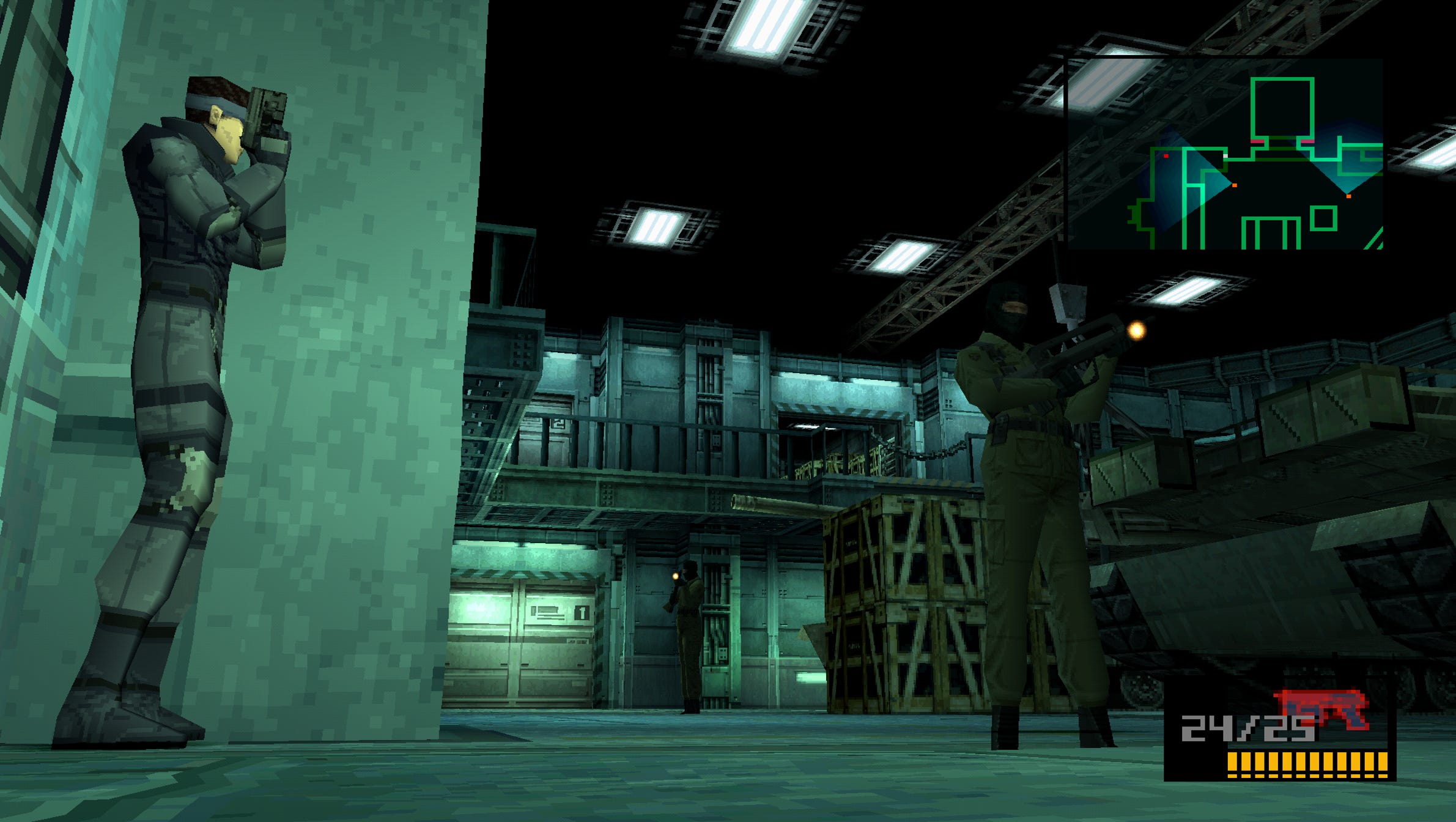
Yet these flaws are symptoms of a game that deliberately rejects industry trends and boldly treads where few had gone before. Metal Gear Solid suffers from the growing pains of early attempts at dynamic, complex narrative writing in console video games. It strives to stylize its presentation and envelop players in an experience that prioritizes narrative and atmosphere over mechanical polish. The driving force is the fall and rise of Solid Snake, with the player firmly locked into his boots.
Experiencing Snake’s mercenary detachment slowly erode as he defines his own morality in the face of rigid military command is a gripping central arc. Finding oneself in the darkest of places while realizing you are little more than a cog in a larger regime is a core dilemma for nearly every character in the game. Antagonists and protagonists alike arrive at messy, painful realizations about their own humanity amid a truly evil plot to bring about nuclear devastation. Its bold and deeply philosophical in a way spy thrillers of the modern day often are not.
I say all of this while standing by my criticism that the story, on a purely textual level, is poorly conveyed. However, the true magic of video game storytelling lies in how music, interactivity, visual design, and the written word swell together to create something greater than the sum of their parts. Metal Gear Solid excels in this regard, its jumbled writing made coherent through careful direction and confident presentation. I was left teary-eyed by the end, struck by how raw the game treats its characters and how effectively it weaponizes those other key creative factors to elevate its thematic power.
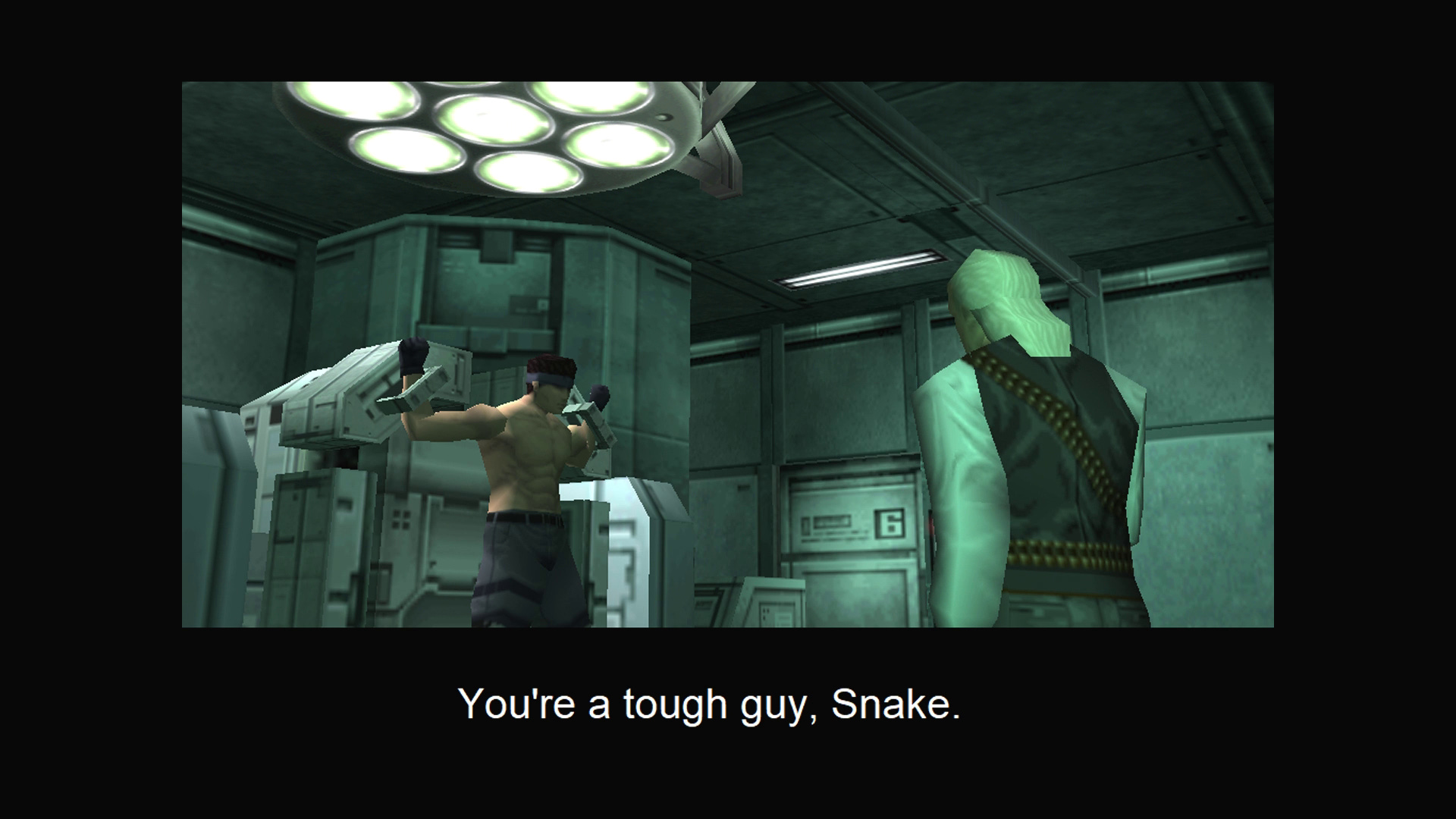
That being said, there are still design failures on the gameplay front that genuinely disappointed me. Certain mechanics and puzzles are only solvable with information pulled directly from the game’s instruction manual—a concept that is undeniably cool, but one that led to frustrating moments of age that I had to consciously turn a blind eye to. It’s conceptually novel, and I appreciate the creativity. Pyscho Mantis is the highlight of this, but needing to find nessecary key codes for progression via the ‘CD Case’ kills immersion in the year of 2025. Being forced to turn to Google or extraneous material is no fun.
Much of the rest of the game feels rigidly on rails. The moments between major cutscenes and boss encounters are often repetitive and constrained. Thankfully, those boss fights really hit. Each one serves a weighty narrative purpose and introduces unique mechanics that directly influence the story’s progression. They maintain a sense of choice and consequence that feels refreshing in an era where so many “action set pieces” feel automated. Player ability matters here, and that agency goes a long way toward ensuring the game’s grand cinematic ambitions actually land. While I didn’t love everything between these moments, I appreciated how brief the standard rooms full of goons tend to be. They move the player from point to point with a precision that results in a reasonably paced experience—one that only ever truly slogged when I struggled with a particular encounter.
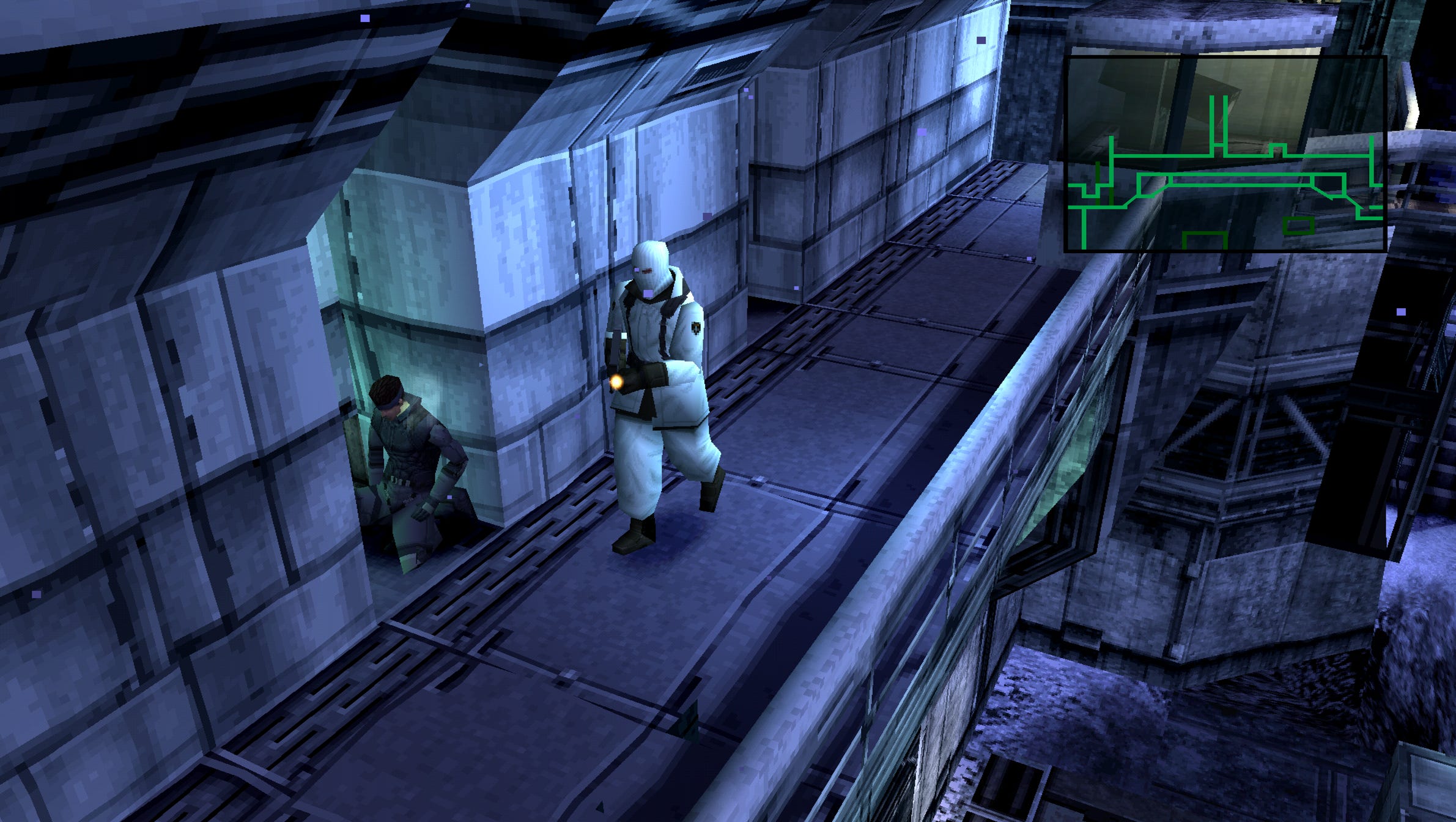
Metal Gear Solid is a game composed of incredible moments that largely outweigh its failings. There is an impressive level of forethought and experimentation baked into its design—experimentation that helped define what we now understand as “triple-A” video games. PlayStation, and the formula behind its major exclusives, has never fully shaken this game’s influence. With four more entries ahead of me, I’m more than excited to see how Kojima continued to evolve this design ethos moving forward.